


 Kit
Kit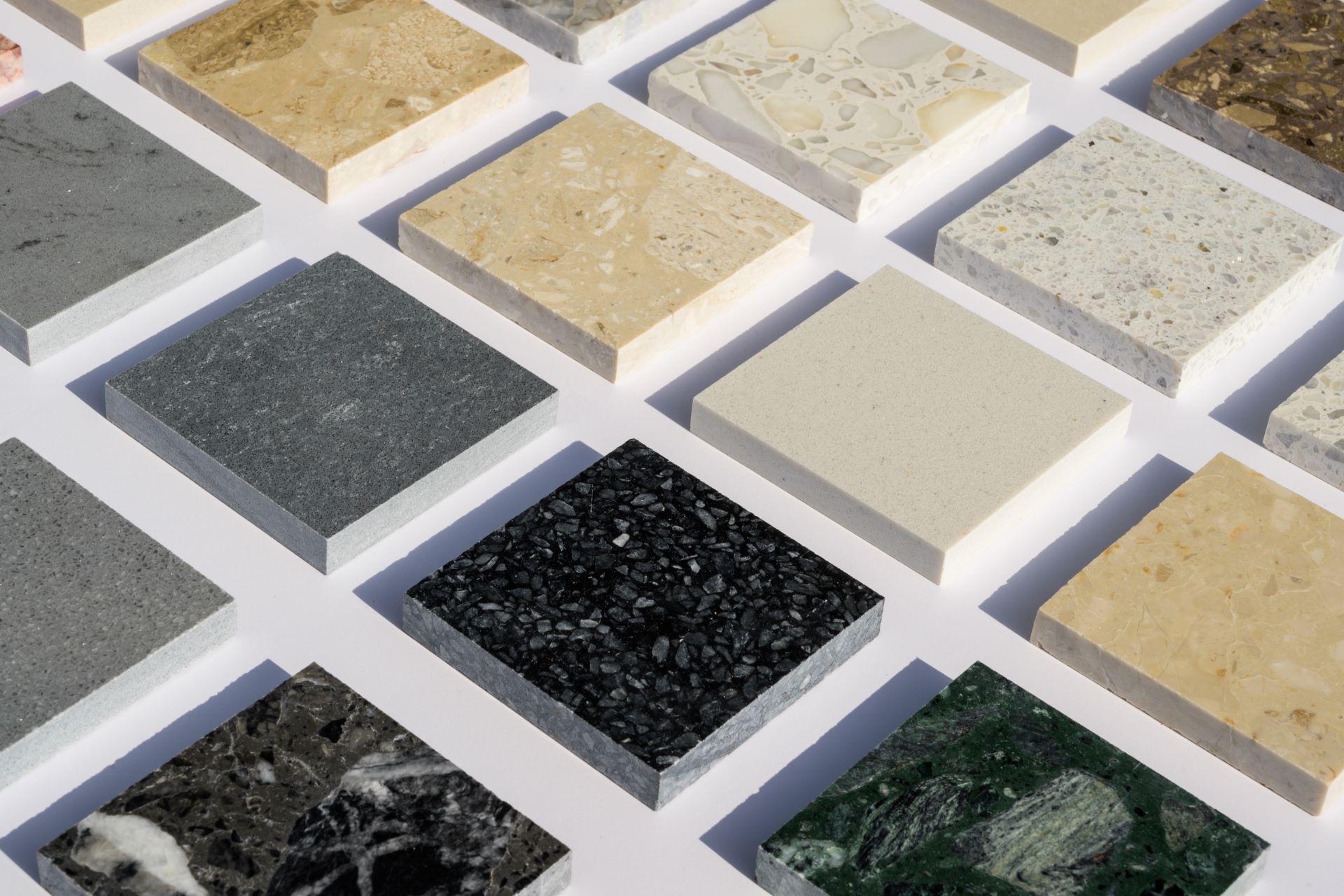 Samples



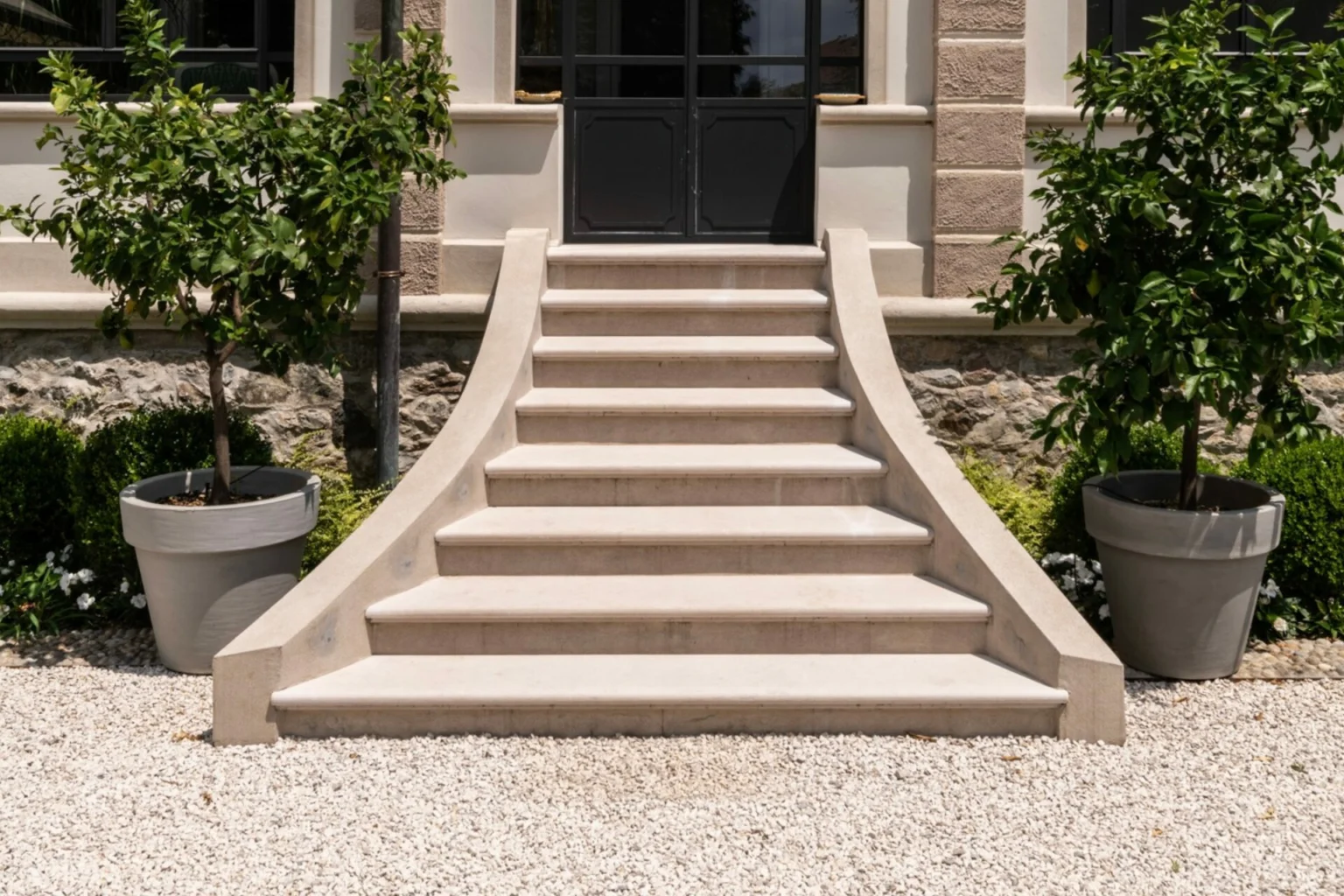
Choosing materials for outdoor use is not just a question of aesthetics. When it comes to materials for the exterior of your home – whether flooring, stairs or cladding for exterior walls and gardens – technical factors come into play that really make a difference over time.
The exterior is the most stressful environment for any surface: rain, frost, temperature changes, exposure to the sun and constant humidity. A material that works perfectly indoors may behave completely differently outdoors. For this reason, when choosing materials for outdoor flooring or cladding, it is essential to evaluate certain specific characteristics: degree of water absorption, frost resistance, structural stability, non-slip finish and the need for protective treatments.
There is no such thing as a perfect material that is suitable for every situation. The right choice always depends on the context, the level of exposure to the elements and the desired aesthetic effect.
Marble, granite and Italian terrazzo are among the most popular outdoor materials for homes and outdoor spaces, but each has specific technical characteristics and requires different management and maintenance.
Let’s take a look at how they perform outdoors and which may be the most suitable choice for your project.
Marble for outdoor use: natural elegance and essential treatments
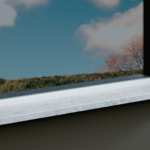
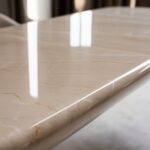
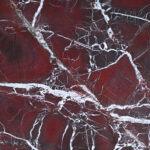
Marble is one of the most aesthetically pleasing materials for outdoor use. Its natural veining and bright colors make it ideal for enhancing entrances, porches, terraces, and outdoor staircases with a strong visual impact. It is also often used for vertical cladding and decorative outdoor garden walls.
From a technical point of view, however, it is important to understand how it behaves outdoors. Marble is a natural stone with variable porosity, which means it can absorb water. In the presence of frost and temperature changes, moisture penetration can cause micro-alterations on the surface that last over time. This is not an insurmountable limitation, but it is something that needs to be managed correctly.
For this reason, when choosing marble among the materials for the exterior of your home, it is essential to consider:
- the specific type of marble
- the finish of the marble
- the actual exposure to atmospheric agents
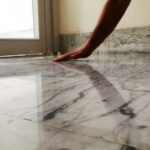
For example, for outdoor flooring and flooring materials, non-slip finishes such as brushed or honed/matt are recommended, while polished finishes are generally less suitable for fully exposed environments.
Maintenance and treatments
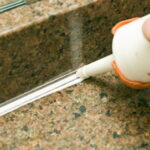
Outdoor marble requires scheduled but not complex maintenance. It is strongly recommended to apply a protective water- and oil-repellent treatment, which reduces water absorption and limits the formation of stains. Depending on exposure, the treatment can be renewed periodically to maintain performance over time.
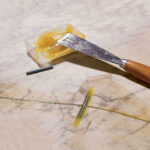
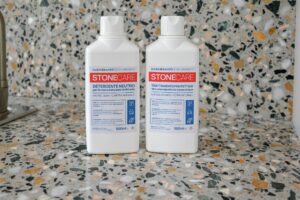
Routine cleaning should be carried out using neutral detergents, such as StoneCare Kit – Stain Treatment for Marble & Granite, avoiding aggressive or acidic products that could alter the surface.
In summary, marble is not a delicate material by definition: it is a choice that requires technical knowledge and proper protection. If well selected and treated, it can guarantee durability and a highly valuable aesthetic result, even outdoors.
Granite for outdoor use: resistance and stability over time
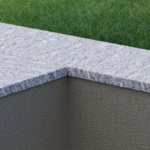
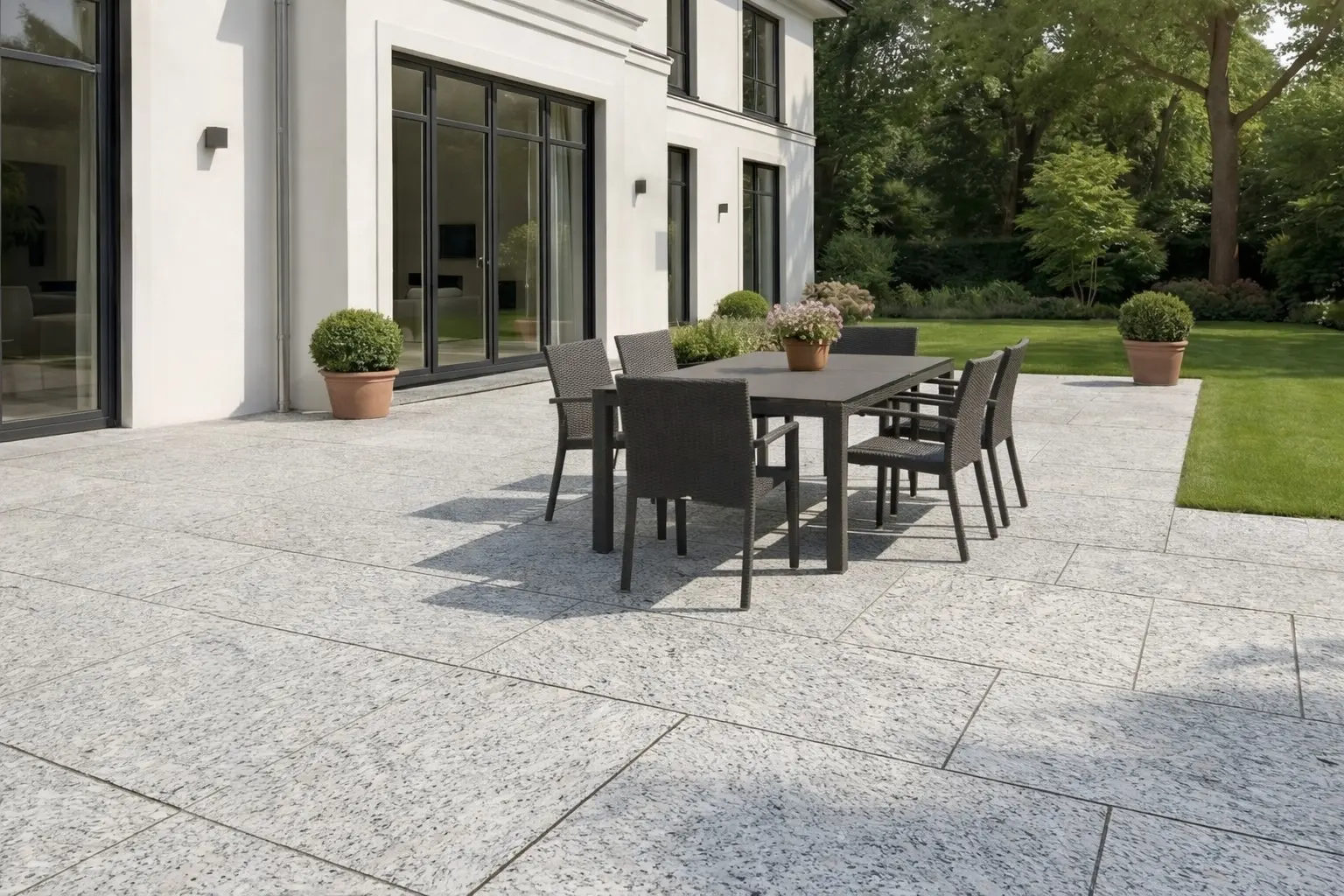
Among outdoor materials, granite is often considered the most solid choice from a technical point of view. It is a natural stone characterized by a very compact structure and a very low level of water absorption. This makes it particularly suitable for environments exposed to rain, frost, and sudden changes in temperature.
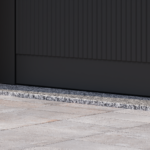
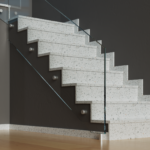
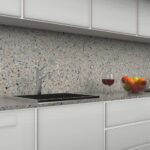
Precisely because of these characteristics, granite is one of the most widely used materials for outdoor flooring in high-stress contexts: courtyards, driveways, entrances, terraces, and completely uncovered spaces. It is also ideal for outdoor staircases, thanks to its hardness and ability to maintain stability over time, and for outdoor garden walls or cladding subject to direct exposure.
From a technical point of view, granite offers:
- high frost resistance
- excellent structural stability
- less sensitivity to stains than other natural stones
For outdoor use, a flamed finish is preferred, as it increases grip and improves safety in the presence of water.
Flaming, as the word itself suggests, consists of passing a special flame over the entire surface of the slab.
This thermal and physical stress causes some of the more superficial crystals to “burst” and detach, creating a roughness that is perfect for outdoor areas with heavy foot traffic or where the risk of ice is higher.
Maintenance and treatments
One of the strengths of granite is its low maintenance. Thanks to its compactness, it does not require frequent intervention. However, a water-repellent treatment can be applied to further increase protection and facilitate cleaning, especially in particularly exposed areas.
Routine maintenance is simple: neutral detergents and periodic washing are generally sufficient to preserve its appearance over time.
If the priority is to choose a solution for outdoor home materials that guarantees durability and resistance with minimal maintenance, granite is one of the most reliable options.
Outdoor Terrazzo Italiano: contemporary design and technical performance
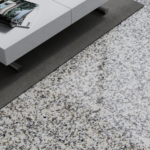
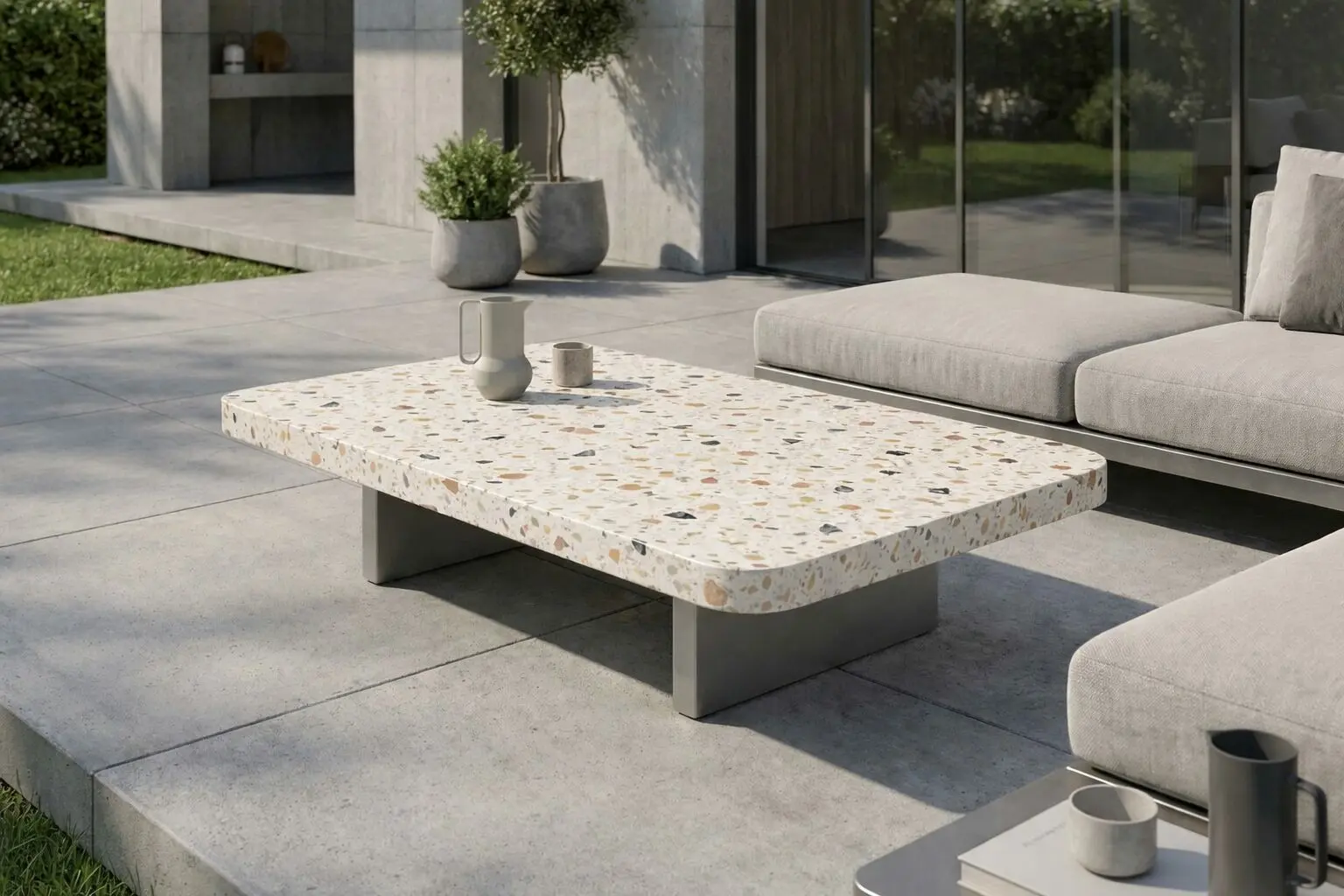
Terrazzo is a solution that combines contemporary aesthetics and structural solidity. Today, it is one of the most interesting outdoor materials for those who want a uniform, customizable result with a strong decorative character.
When it comes to outdoor use, it is important to distinguish between the different types: for outdoor home materials, cement-based terrazzo is recommended, as it is more suitable for exposure to the elements than resin versions, which are mainly designed for indoor use.
From a technical point of view, outdoor terrazzo offers:
- good frost resistance if correctly produced and laid
- color stability over time
- a compact and continuous surface
- wide range of customization options in terms of colors and aggregates
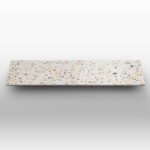
It can be used for outdoor flooring, stairs, vertical cladding, and decorative garden walls. It is particularly popular in contemporary projects where a uniform, textured surface with a more balanced aesthetic is desired.
Terrazzo is also a technical and aesthetic solution for outdoor cladding materials, capable of enhancing facades and architectural surfaces.
Maintenance and treatments
As with natural stone, Terrazzo also requires initial protective treatment, especially to limit water absorption and facilitate cleaning. Product quality and correct installation have a decisive impact on performance over time.
Routine maintenance is simple and involves using neutral detergents and periodic washing. With proper treatment, terrazzo maintains its stability and aesthetic appeal even in exposed outdoor environments.
In summary, Terrazzo is a technical choice but also a highly design-oriented one: a material that combines durability and visual identity, ideal for those seeking a balance between performance and design.
Choosing between marble, granite, and Terrazzo means carefully evaluating aesthetics, durability, and maintenance. There is no such thing as the best material overall, but rather the most suitable material for your project, the level of exposure, and the result you want to achieve over time.
If you are considering outdoor materials for flooring, stairs, or cladding, technical advice can help you make an informed and lasting choice.
At MarmoGranito, you can configure your custom project or request a personalized quote to find the solution that best suits your needs.