




 Kit
Kit Samples



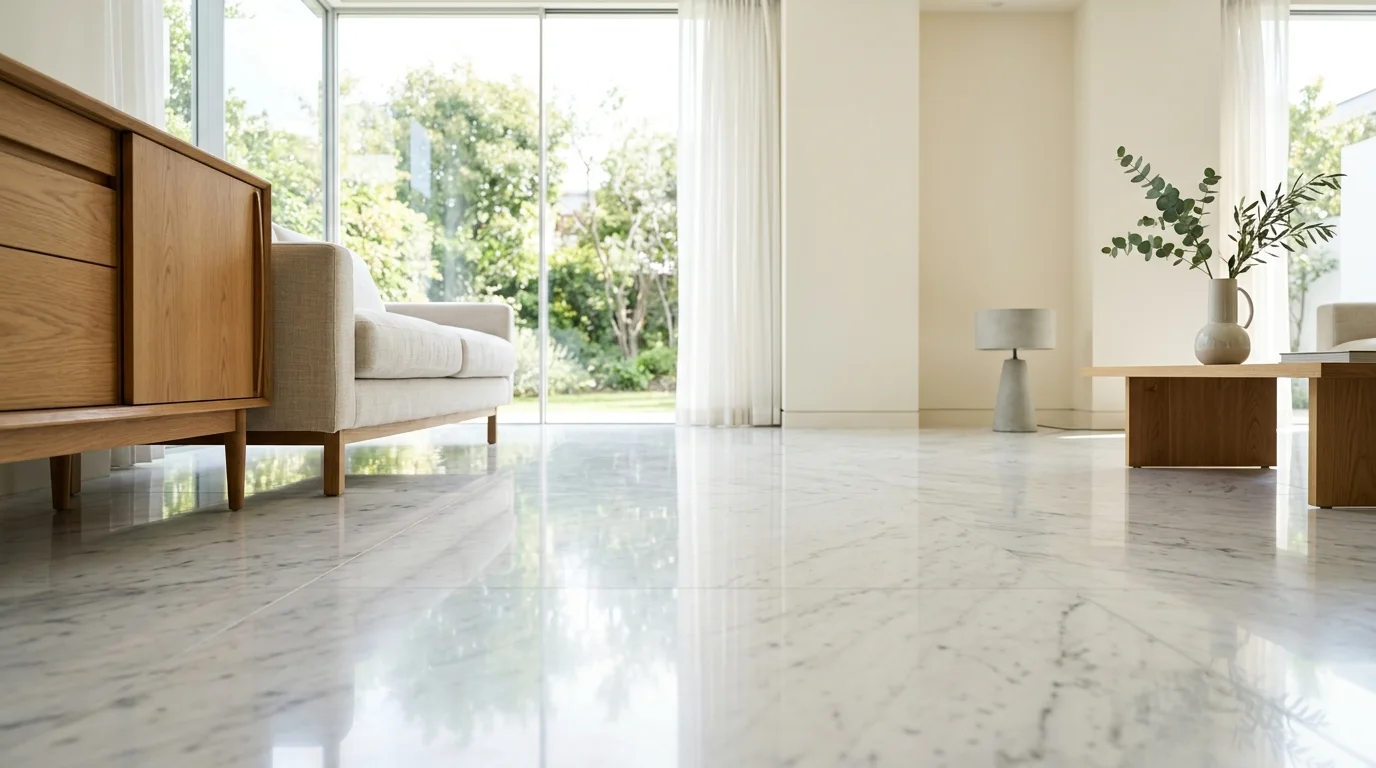
Knowing how to clean and maintain polished marble floors is the difference between a surface that stays mirror-bright for decades and one that dulls and stains within a year. This practical guide explains why the problems happen, then gives you a clear three-level routine, a stain first-aid table, and guidance on restoring shine and protection.
Why polished marble loses its shine and stains
Marble is a natural, crystalline stone that behaves very differently from porcelain or engineered surfaces. Three mechanisms are responsible for most damage:
- Porosity: marble absorbs liquids. Oil, wine and coffee seep below the surface and leave marks that simple wiping cannot remove.
- Acid sensitivity: calcium carbonate reacts with acids. A splash of lemon, vinegar or descaler creates a dull, rough patch called an etch, even where there is no visible stain.
- Micro-scratches: fine sand and grit dragged by shoes act like sandpaper. Over time they scatter light and the polished finish turns cloudy, especially along walkways.
Understanding these three factors makes the right routine obvious: keep grit off the floor, avoid acids, and seal the pores.
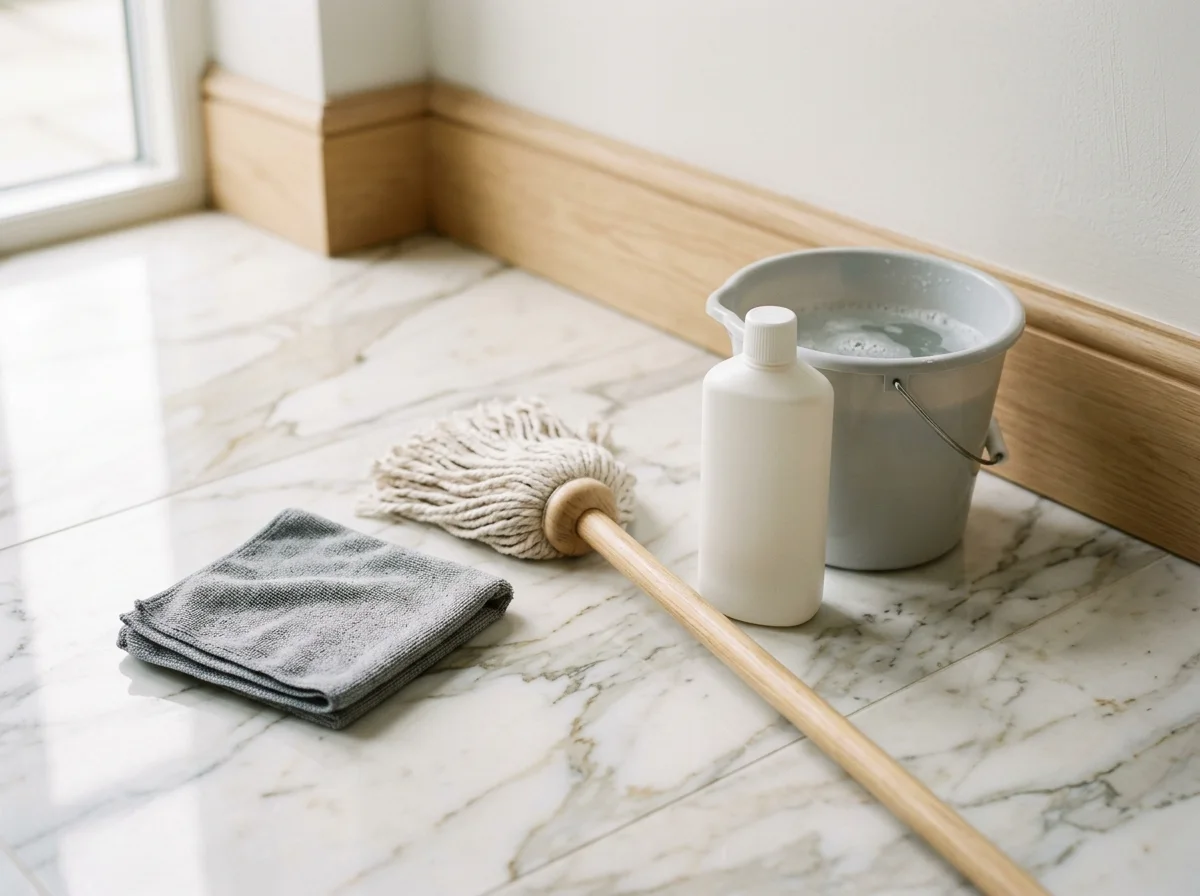
The correct three-level maintenance routine
Consistency matters more than intensity. Split your care into daily, weekly and periodic actions.
Daily cleaning
- Dust-mop or vacuum with a soft head to remove abrasive grit before it is walked in.
- Clean with a microfibre cloth or mop and a pH-neutral detergent diluted in lukewarm water.
- Never leave standing water: wipe up spills immediately and dry the surface, as pooled water can leave rings and dull the gloss.
Weekly care
- Do a thorough wash with fresh pH-neutral solution, changing the water often so you are not spreading dirt.
- Pay attention to high-traffic areas and entrances where micro-scratching starts.
- Buff lightly with a dry microfibre cloth to revive the shine.
Periodic maintenance
- Inspect the floor for early dull patches, light etching or faded protection.
- Refresh the stain-repellent treatment and, when needed, restore the gloss (see below).
- The Kit MarbleShine bundle is a convenient way to keep the right products on hand for this cycle.
What to never use on marble
Many common household products are the fastest way to ruin a polished floor. Keep these away from marble permanently:
- Vinegar and lemon – acids that etch the surface instantly.
- Limescale removers and anti-calc sprays – formulated to dissolve calcium, which is exactly what marble is made of.
- Bleach and ammonia – aggressive, discolouring and damaging to the finish.
- Abrasive sponges and scouring pads – they scratch and dull the polish.
- Aggressive steam cleaners – heat and pressure can open the pores and harm sealers.
Marble stain first-aid
Act quickly and always blot rather than rub. Use this table as a quick reference.
| Stain | What to do |
|---|---|
| Oil / grease | Blot, then apply a mild absorbent paste; clean with pH-neutral detergent. |
| Wine | Blot immediately, rinse with water and neutral cleaner; treat residual marks with a stone-safe poultice. |
| Coffee | Blot, wash with neutral detergent; for lingering shadows use a dedicated stone cleaner. |
| Limescale | Never use descaler; soften with warm water and a soft cloth, repeating gently. |
| Rust | Use only a rust remover specifically rated as safe for natural stone. |
| Water rings | Dry thoroughly, buff with microfibre; restore gloss if the mark persists. |
When to restore shine and renew stain protection
If buffing no longer brings back the mirror finish, or you notice diffuse cloudiness and light etching across walkways, it is time to restore the polish. The Kit MarbleShine – Marble Re-Polishing Treatment revives depth and reflectivity without professional machinery for routine refreshes.
Protection is your best defence against stains. Renew the stain-repellent treatment periodically, and always after a deep restoration. The StoneCare Kit – Stain Treatment for Marble & Granite penetrate the pores to block oil and water-based spills, buying you precious time to wipe them away.
Frequently asked questions
Do rugs and doormats help?
Yes. Placing doormats at entrances traps sand and grit, dramatically reducing micro-scratching on polished marble.
Can I use a vacuum cleaner?
Use one with a soft brush head and check the wheels for trapped grit; a hard nozzle can scratch the surface.
Is marble safe with pets?
Generally yes, but keep nails trimmed to limit scratches and wipe up water or food spills promptly.
Does underfloor heating affect marble?
Marble tolerates it well when temperature changes are gradual; maintain your normal routine and keep the surface dry.