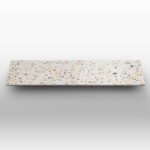
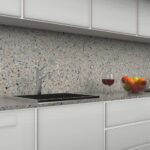
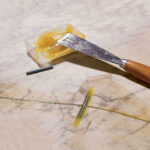
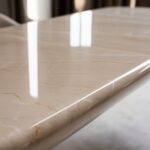


 Kit
Kit Samples



Is travertine marble? The clear answer
Travertine is not a true marble, but the two are closely related. Travertine is a limestone formed by mineral springs, while marble is limestone that has been metamorphosed under heat and pressure. In the trade, travertine is often sold as a “marble”, which is why so many UK buyers ask whether travertine marble is one and the same. It isn’t and the difference affects porosity, hardness and how you should use it.
Travertine, marble and granite compared
Understanding how travertine sits alongside marble and granite helps you choose the right stone for each room.
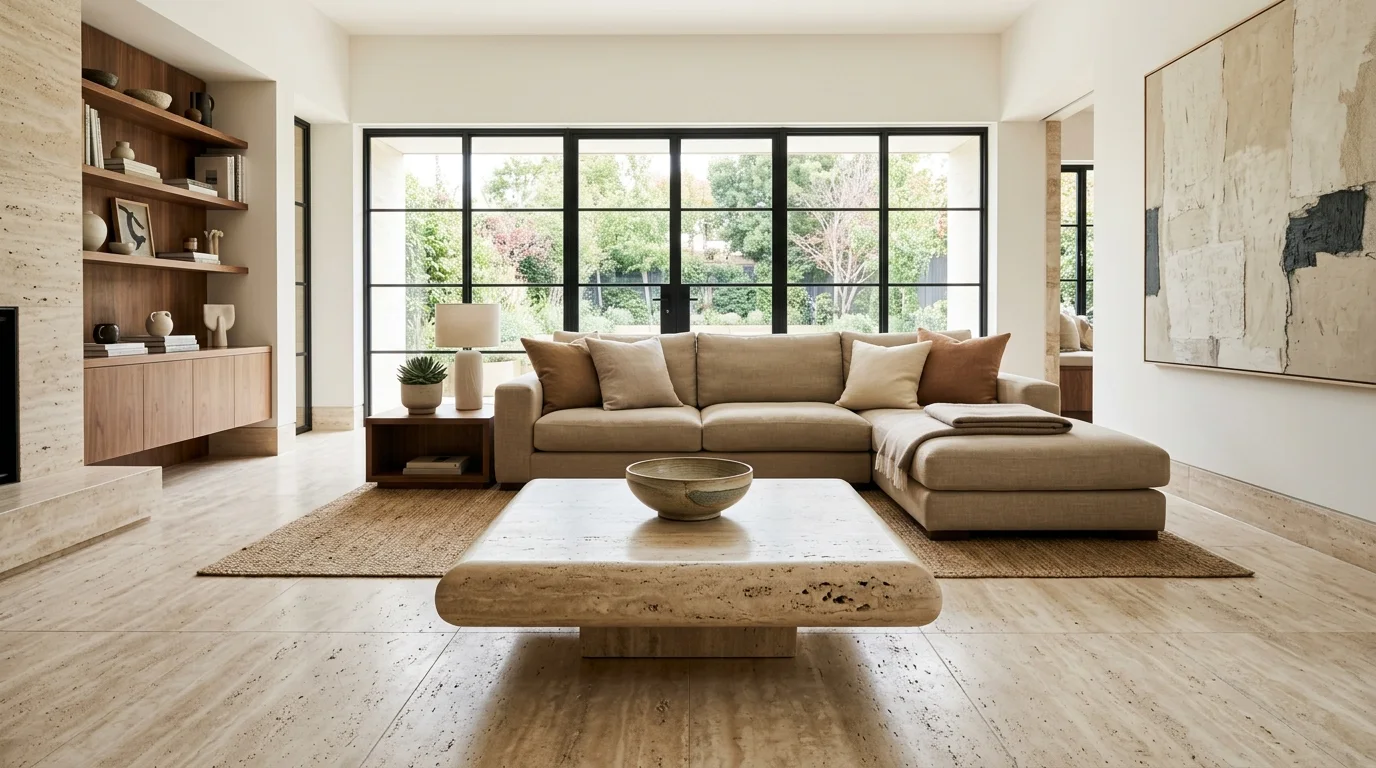
Travertine is recognisable by its warm tones and the natural cavities that make every slab unique. It is a stone of medium hardness and fairly porous, and it is sensitive to acids such as lemon juice and vinegar. For this reason it requires a protective treatment that needs to be renewed over time. It is best suited to floors, wall cladding and bathrooms.
Marble stands out for its elegant veining on a uniform background. It has medium hardness and moderate porosity, but like travertine it is sensitive to acids and needs a periodic protective treatment. It is ideal for bathrooms, floors and worktops with moderate use.
Granite has a grainy, crystalline appearance and is the hardest of the three. It absorbs very little water and resists acids well, so maintenance is minimal and an occasional treatment is enough. It is the most suitable choice for kitchen worktops, outdoor areas and high-traffic zones.
The most popular travertine varieties
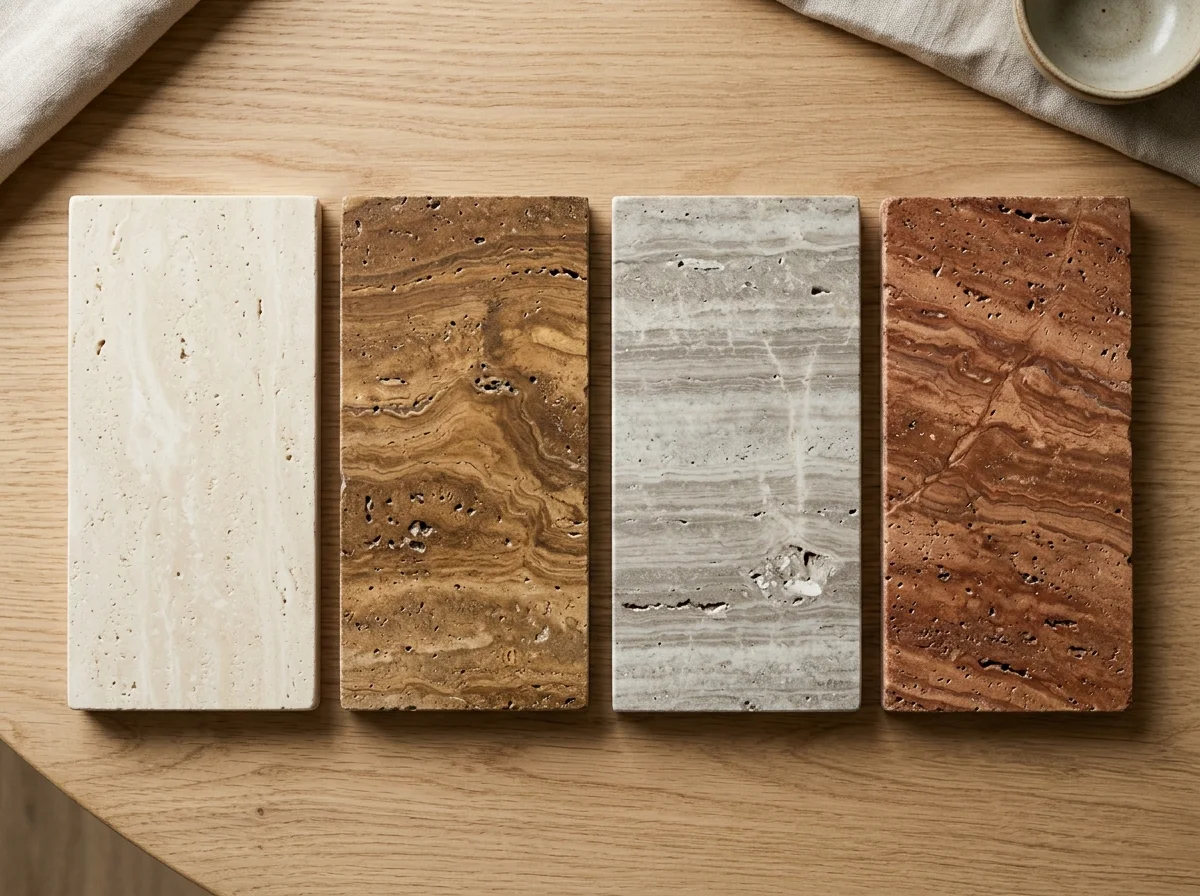
Most travertine on the UK market is quarried in Italy. The best-known varieties include:
- Travertino Navona – classic warm cream tones, the most requested for flooring.
- Travertino Romano – the traditional Roman stone, ivory to beige.
- Travertino Noce – rich walnut browns, ideal for statement floors.
- Travertino Silver – cool grey banding, perfect for contemporary interiors.
- Travertino Scabas – layered golden and beige tones with strong character.
Travertine finishes
The same slab can look entirely different depending on the finish:
- Polished – smooth and reflective, for a refined look.
- Brushed – softly textured, slip-resistant surface.
- Tumbled / antiqued – aged, rustic character for period homes.
- Filled – natural holes resin-filled for easy cleaning.
- Open pore (unfilled) – authentic texture, best sealed and used with care.
Where to use travertine: indoors and outdoors
Travertine is remarkably versatile. Indoors it works beautifully as flooring, feature walls, fireplace surrounds and bathroom vanities. Its porosity means bathrooms and wet areas should always be properly sealed. Outdoors, brushed or tumbled travertine is a favourite for patios, garden paths and pool surrounds, where its cool surface and natural grip are real advantages. In frost-prone parts of the UK, choose a dense, well-sealed material to avoid weathering.
Maintenance and stain protection
Because travertine is porous, sealing is essential – especially in kitchens, bathrooms and around pools. A good routine protects against wine, oil and limescale marks while preserving the natural finish. We recommend:
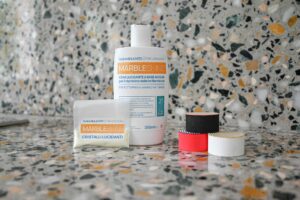
- Kit Marmo – for everyday cleaning and care of marble and natural stone.
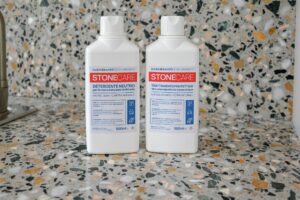
- Kit StoneCare: Anti-Stain Treatment for Marble and Granite – a complete protective system for lasting results.
So, is travertine a marble? Not technically – but with the right variety, finish and protection, it delivers timeless warmth that rivals any stone. Ready to start? Get your tailored Preventivo online today.