
 Kit
 Samples


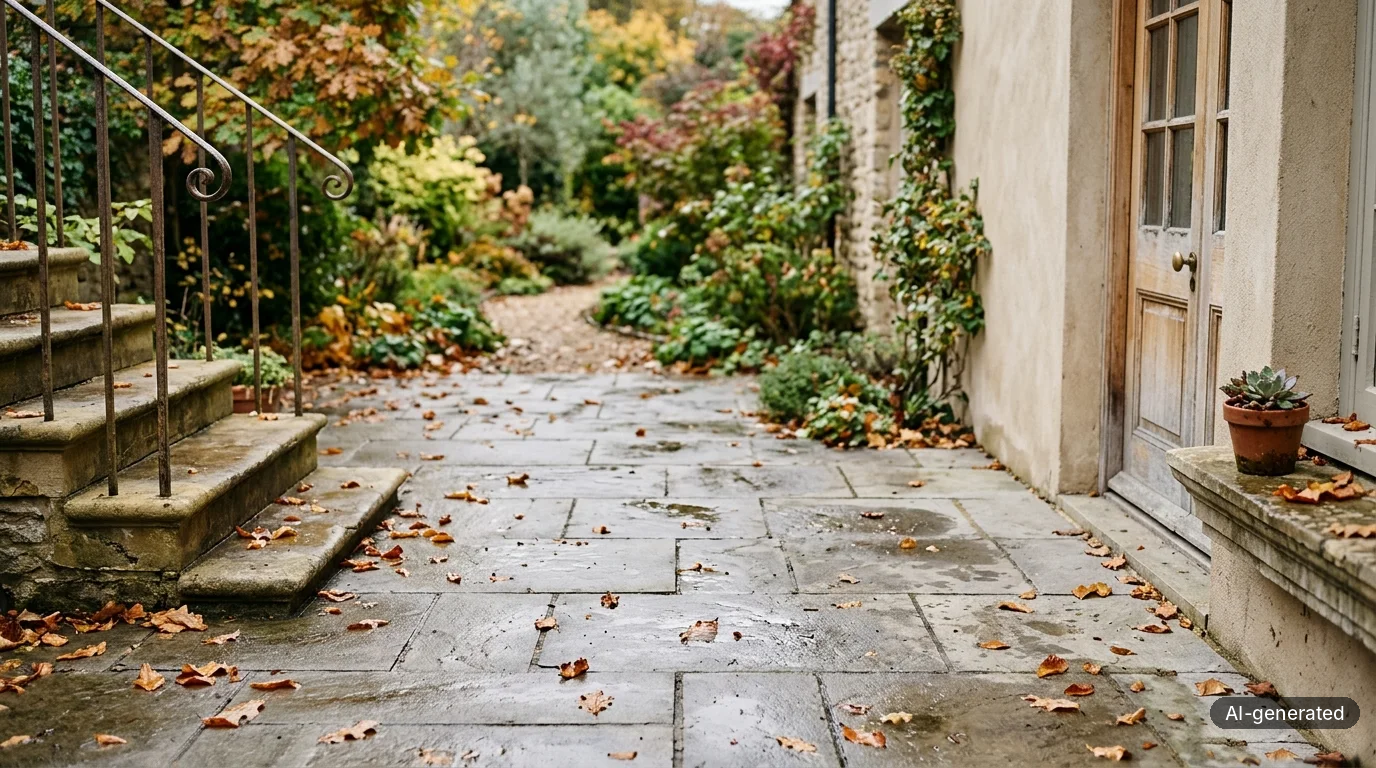
Autumn is the smartest moment for pietra serena maintenance: stain protection and outdoor cleaning done now shield floors, window sills and steps before damp, driving rain and the first frost set in. This is a practical seasonal calendar with an operational checklist, not another material fact sheet. Follow it and you will go into winter with surfaces that resist water, oil and biological growth far better.
Why pietra serena stains and darkens
Pietra serena is a fine-grained sandstone with an open, porous structure. That porosity is exactly why it marks easily: liquids, oils and airborne dirt are drawn below the surface by capillary action, where they are hard to remove. Outdoors, repeated wetting and slow drying let water carry dissolved substances in and out of the stone, which is what causes the surface to darken unevenly over time.
How to recognise the main problems
- Oil and grease stains: dark, slightly translucent patches with soft edges, often near barbecues, planters or parking areas. They deepen the colour and feel reluctant to dry.
- Moss and algae: green, grey or blackish films in shaded, permanently damp zones. The surface feels slippery when wet.
- Efflorescence: powdery white deposits that appear as water evaporates and leaves mineral salts on the surface. They wipe partly away when dry but return after rain.
- Water rings and halos: pale or dark outlines left where standing water pooled and dried, typically on sills and step treads.
Which products to use and which to avoid
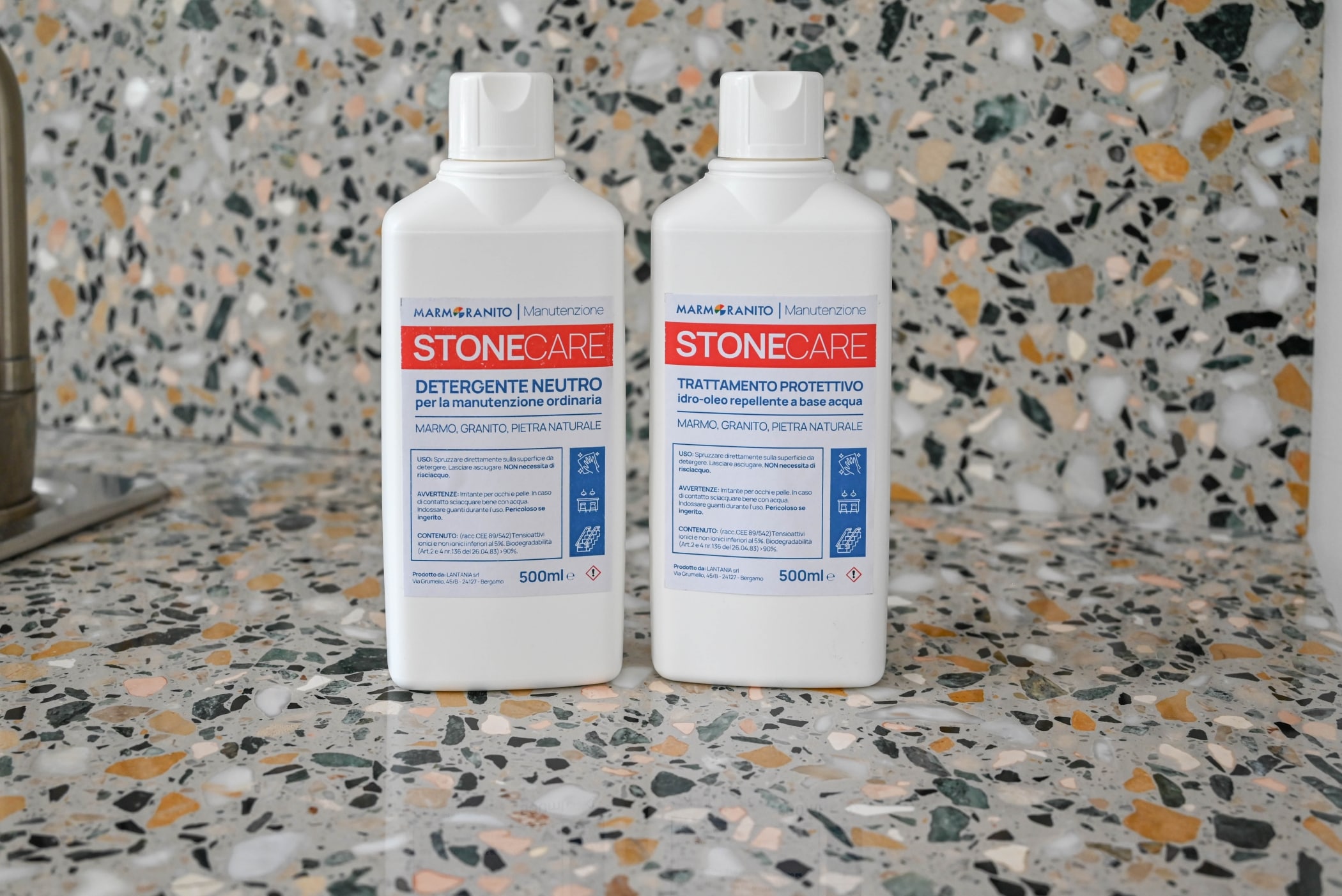
Match the cleaner to the stone, not the other way round. A neutral, dedicated cleaner lifts grime without opening the pores further, and a quality stain-proofer does the long-term work. For a complete, coordinated approach the StoneCare Kit – Stain Treatment for Marble & Granite brings cleaning and protection together.
Just as important is what to leave on the shelf:
- Acids (including descalers and many “limescale” products): they etch and roughen the surface, making future staining worse.
- Bleach and harsh chlorine cleaners: they can bleach the colour unevenly and leave halos.
- Very high-pressure washers: aggressive jets erode the soft grain and force water deep into the stone. If you must use pressure, keep it low and the nozzle well back.
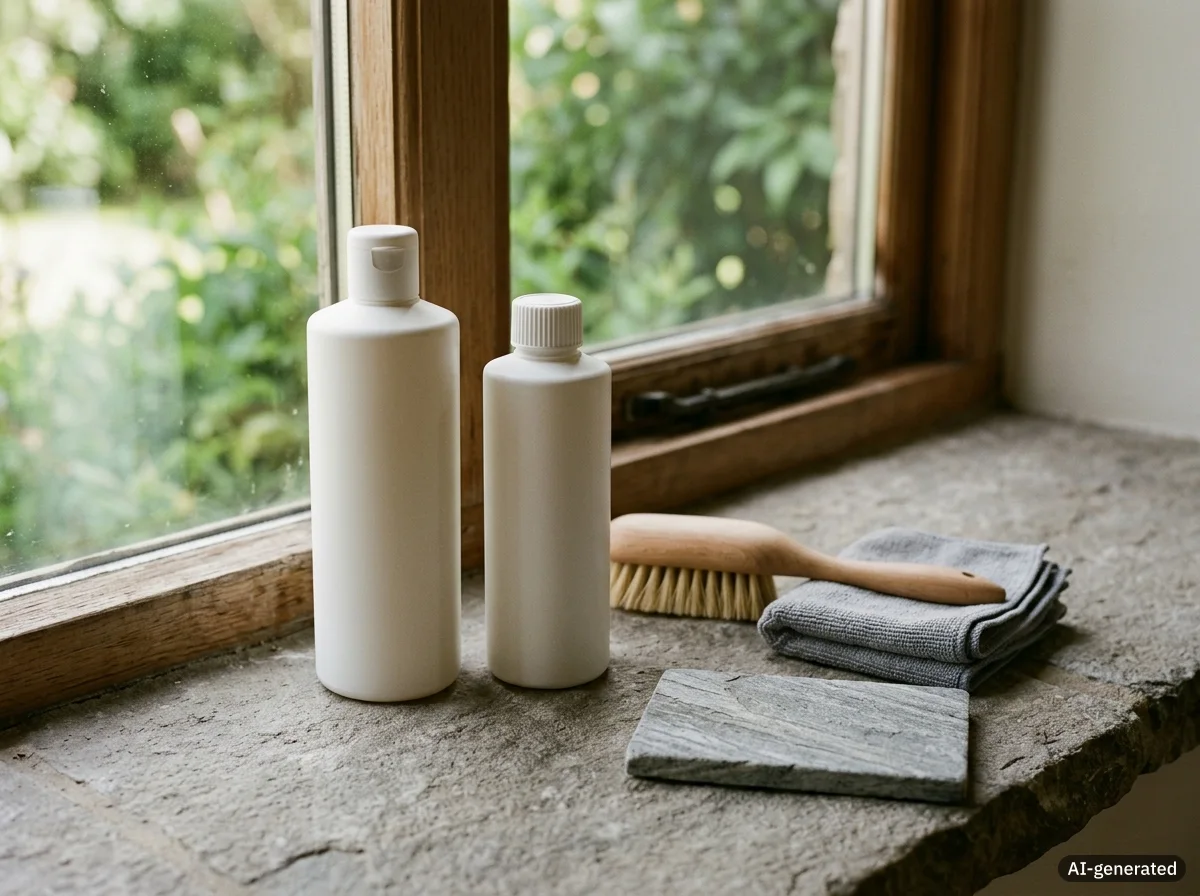
The water- and oil-repellent treatment: how often to renew it
A penetrating stain-proofer works by reducing absorbency, so water and oil bead up instead of soaking in. On exposed outdoor surfaces, plan to refresh the treatment roughly every one to two years, and sooner on heavily trafficked steps or sunny sills.
Check performance with the drop test: place a few drops of water on a clean, dry area and wait a couple of minutes. If the drops stay rounded and bead on top, protection is intact. If they flatten, spread or darken the stone, it is time to re-apply.
How to apply the stain-proofer, step by step
- Clean thoroughly and remove moss, oil and efflorescence first.
- Dry completely; the stone must be dry through, not just on the surface, so allow enough time after cleaning or rain.
- Apply an even, generous coat with a cloth, roller or brush, working in manageable sections.
- Wait the recommended dwell time, then remove any excess that has not absorbed to avoid sheen or sticky residue.
- Cure: protect from water and traffic while the treatment settles.
On surfaces already treated, do not strip them blindly. Run the drop test, clean gently, and simply top up the areas that no longer repel water rather than re-coating everything.
Quick comparison: problem and intervention
| Problem | How to recognise it | What to do |
|---|---|---|
| Oil stain | Dark translucent patch, soft edges | Neutral degreasing clean, dry, then re-seal |
| Moss / algae | Green-black slippery film in shade | Remove biological growth, improve drainage, dry, seal |
| Efflorescence | White powdery salt deposits | Dry-brush, dedicated cleaner, address water source |
| Water halo | Pale or dark ring where water dried | Clean, dry fully, restore repellency |
FAQ
Can I use bleach to remove moss from pietra serena?
Avoid it. Bleach can lighten the stone unevenly and leave halos; use a dedicated cleaner and remove growth mechanically instead.
How do I know if my stone still needs sealing?
Do the drop test: if water beads, protection is fine; if it spreads or darkens the surface, re-apply a stain-proofer.
Is a pressure washer safe?
Only at low pressure with the nozzle kept well back. Very high pressure erodes the soft grain and drives water into the stone.
Should I seal new stone before or after staining?
Always clean and fully dry first, then seal; protecting dirty or damp stone traps the problem underneath.