



 Kit
Kit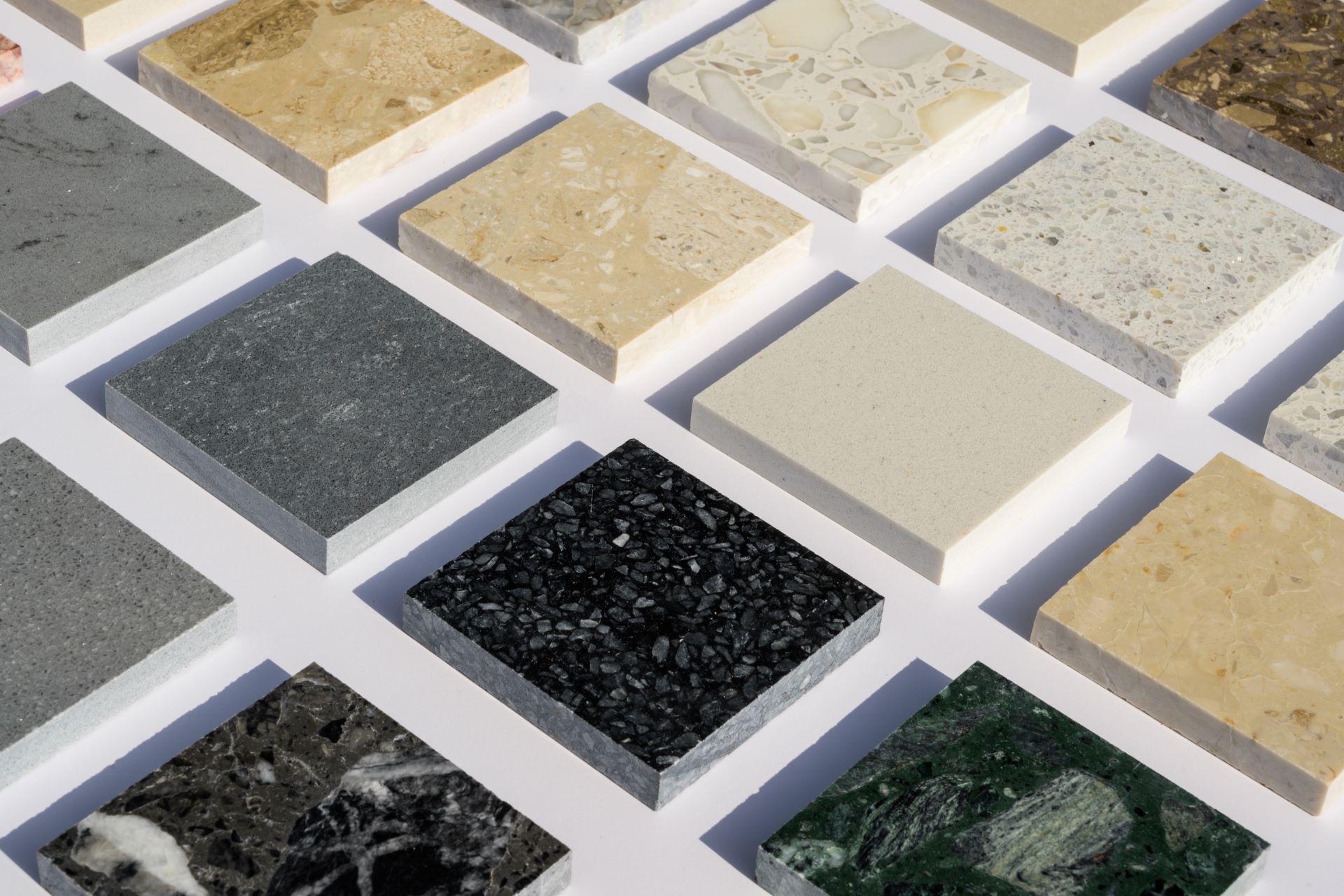 Samples



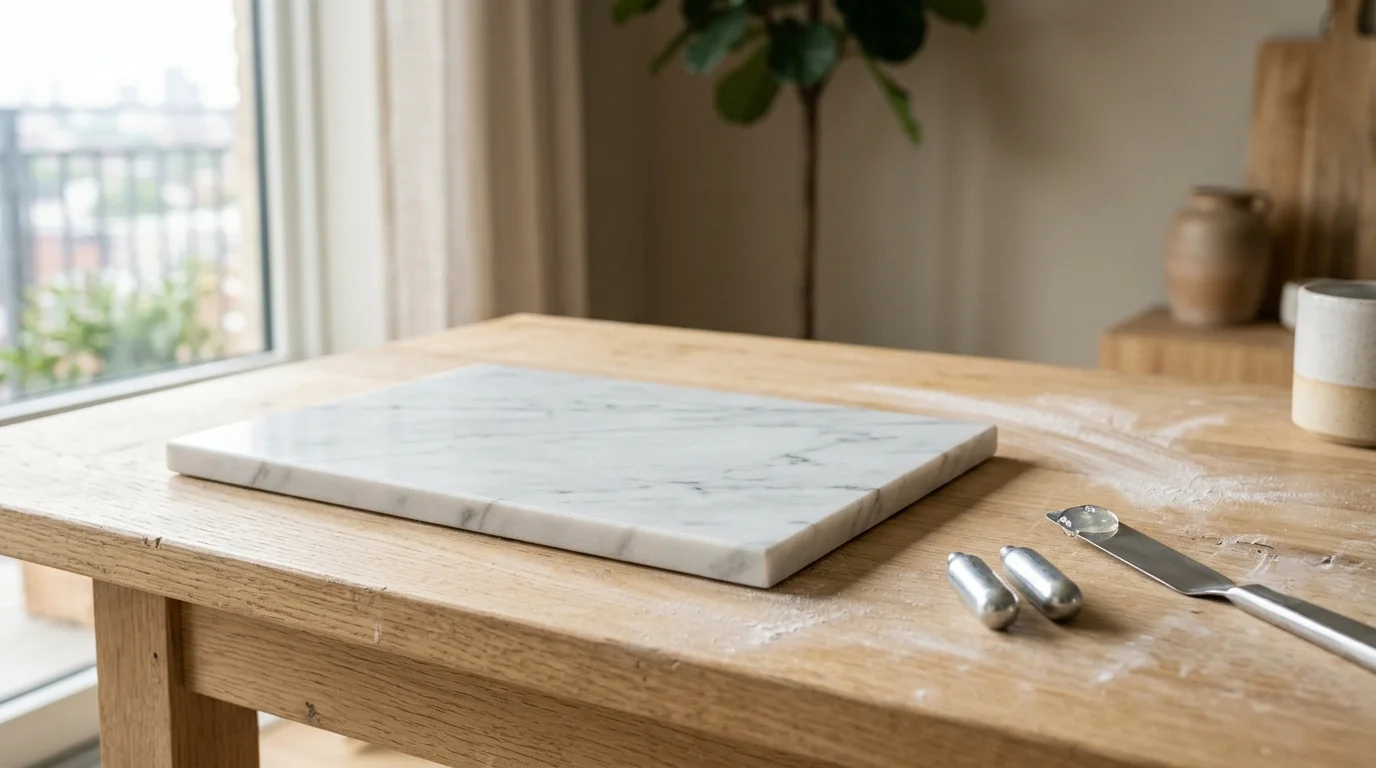
Two-part adhesive for marble: which to choose in seconds
A two-part adhesive for marble is a chemical-cure system made of a resin and a catalyst (hardener) mixed just before use. When you ask which adhesive to choose for marble, the short answer is: use epoxy for structural bonds and invisible repairs, polyester for fast slab assembly, and silicone only for flexible, waterproof joints—never for load-bearing bonds.
This guide is written for stone fitters and homeowners across the UK who need to bond, laminate or repair marble, granite, quartz and ceramic. Explore our full Adhesives (Collanti) category for the products referenced below.
Two-part adhesive vs mastic vs silicone
A two-part (bicomponent) adhesive cures by chemical reaction, giving high strength and near-invisible seams. A mastic is often a single-part filler with lower structural value. A silicone stays elastic and is designed for sealing movement joints, not for holding stone together.
Comparison table: epoxy, polyester and silicone
Epoxy resin is designed for structural bonding. It sets in 20-40 minutes at 20 °C and fully cures in 12-24 hours. It should be applied at temperatures between +15 and +30 °C. Once cured it is rigid and offers excellent resistance outdoors.
Polyester resin is used both for bonding and as a filler. It is the fastest of the three, setting in 6-12 minutes at 20 °C and fully curing in 1-2 hours. It can be used between +10 and +35 °C, is rigid and offers medium resistance outdoors.
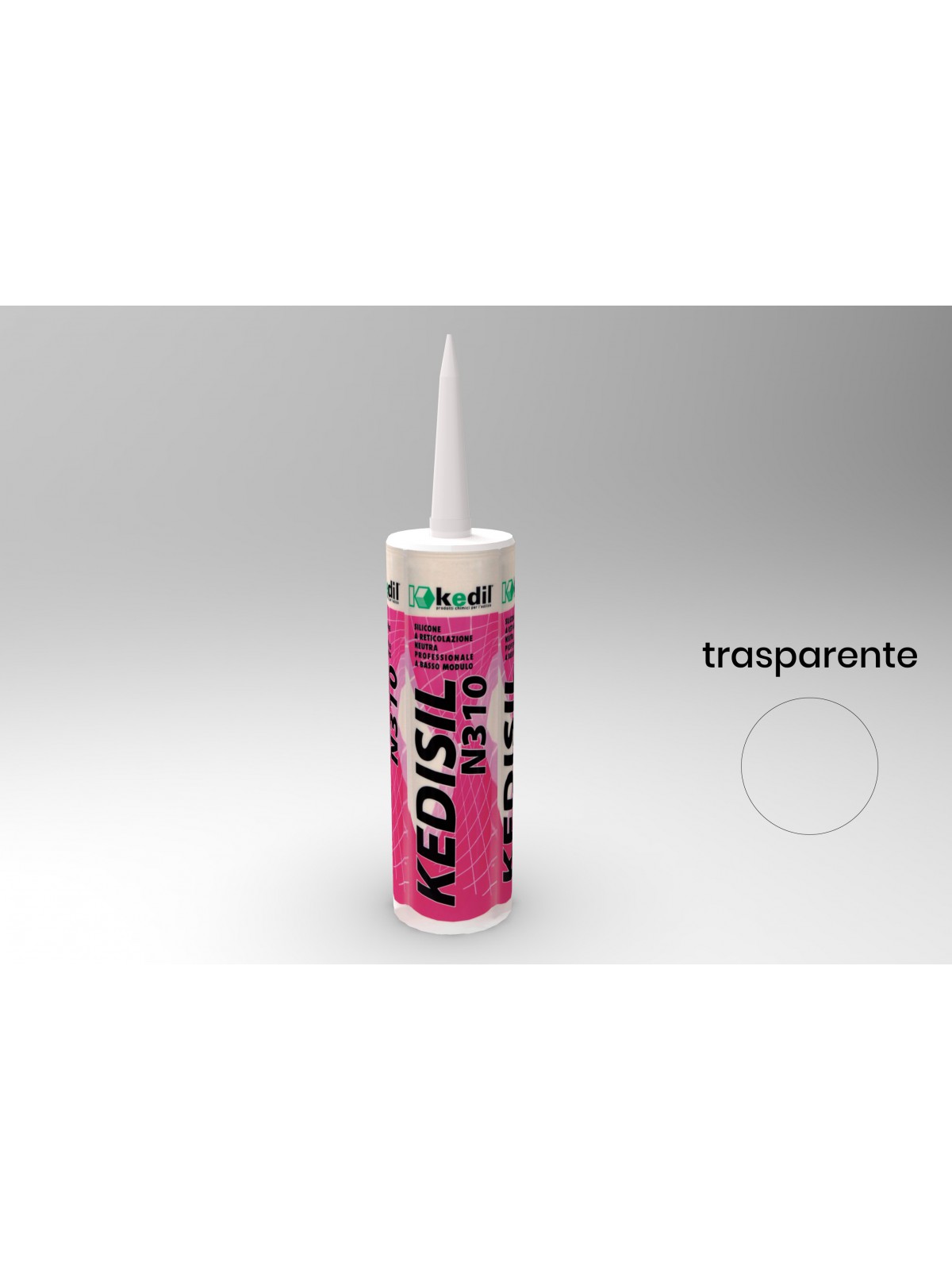
Kedisil N 310 silicone is intended for elastic sealing. It is tack-free in 10-20 minutes and fully cures in 24-48 hours. It has the widest working range, from +5 to +40 °C, high elasticity and excellent outdoor resistance.
Selection checklist by material and environment
- Marble (interior): knife-grade epoxy for chip repair and invisible seams.
- Granite (kitchen worktops): polyester for fast lamination, epoxy for edge repairs.
- Quartz (countertops and bathroom): medium-setting epoxy, neutral-colored to avoid altering the slab’s natural color.
- Ceramic / stoneware (bathroom and floors): two-component epoxy for spot bonding and repairing chips.
- Bathroom & exterior: epoxy for bonds; seal movement joints with neutral silicone.
Choosing the colour to match the stone
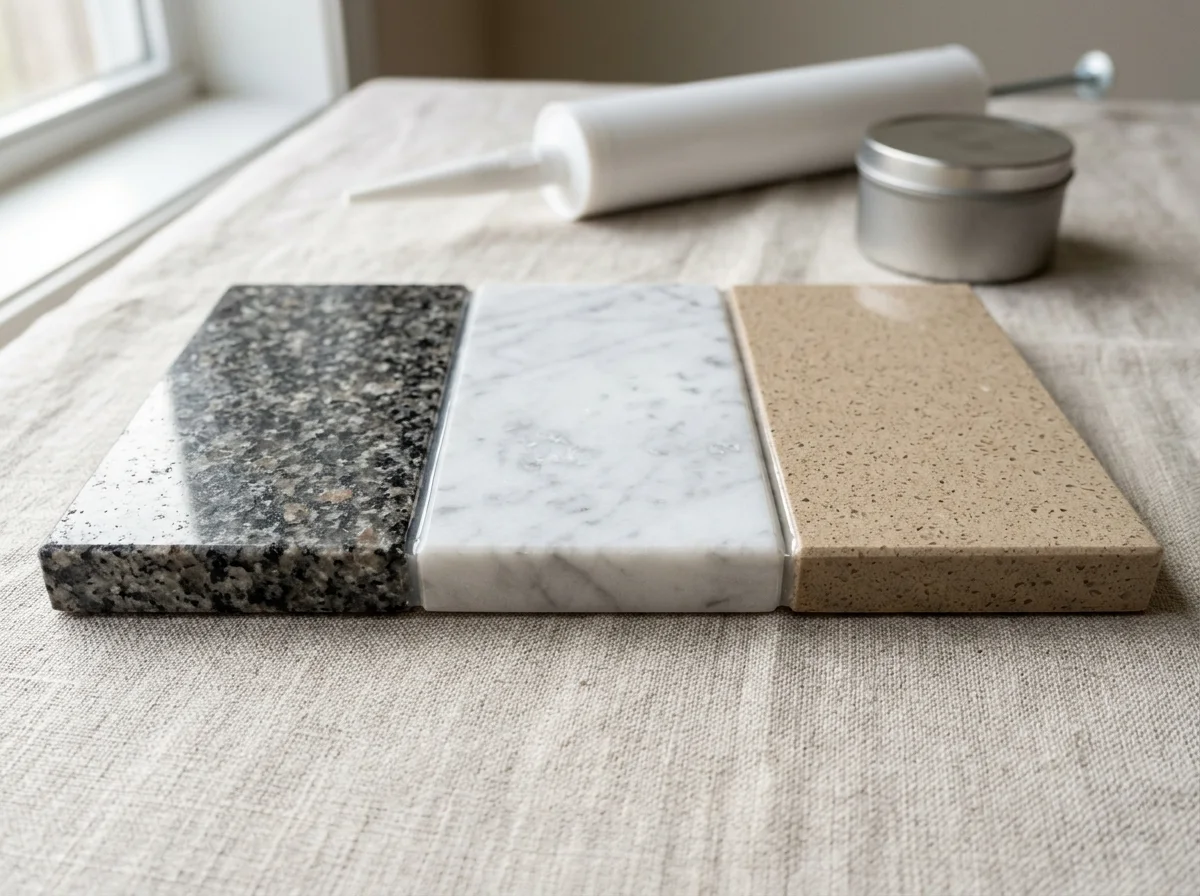
Colour is the difference between a repair that disappears and one you always notice. For flexible joints, match Silicone Kedisil N 310 to the stone: use Silicone Kedisil N 310 Bianco (White) for Carrara and white quartz, Silicone Kedisil N 310 Trasparente (Clear) for translucent or veined stone, Beige for travertine, Tortora (Taupe) for warm greys, and Antracite (Anthracite) for black granite and dark porcelain.
Step-by-step method in 6 steps
1. Prepare the substrate: the surface must be dry, dust-free and degreased with acetone. Any moisture halves bond strength.
2. Dose the catalyst: weigh 2-3% catalyst for epoxy or 1.5-2% for polyester. Under-dosing prevents curing; over-dosing causes yellowing.
3. Add pigment: tint to match the stone before applying – check colour on an offcut first.
4. Mix thoroughly: blend for 60-90 seconds until uniform, avoiding air bubbles.
5. Apply and clamp: spread a thin, even layer, close the joint and remove pressure only after initial set.
6. Clean the excess: scrape squeeze-out while still soft; remove cured residue with a blade at a low angle.
Common mistakes to avoid
- Bonding below 15°C, which can double epoxy curing time.
- Using silicone as a structural adhesive – it will fail under load.
- Skipping the acetone wipe on polished or oily granite.
- Mixing more than you can apply within the pot life (often under 15 minutes).
- Guessing the catalyst by eye instead of weighing it.
FAQ – Frequently asked questions
Which two-part adhesive is best for marble?
Knife-grade epoxy is best for marble repairs and invisible seams; it fully cures in 12–24 hours at 20°C.
How much does a kit cover per linear metre?
A typical stone repair kit covers roughly 8–12 linear metres of standard 20 mm mitre joint, depending on bead size.
Can I use silicone instead of adhesive?
No. Silicone seals movement and water joints but has no structural strength—use it alongside, not instead of, epoxy.
How much catalyst should I add?
Add 2–3% catalyst by weight for epoxy and 1.5–2% for polyester at 20°C; increase slightly in cold conditions.
How long before I can polish the joint?
Wait for full cure—12–24 hours for epoxy and 1–2 hours for polyester—before sanding or polishing.