

 Kit
 Samples


Looking for a clear overview of the types of granite, their names, colours and the varieties most used for kitchens and flooring? This guide works as a visual catalogue: first we explain what sets granite apart, then we group the leading varieties by colour, review the main finishes and close with a practical checklist to choose with confidence.
What makes granite different from other stones
Granite is an igneous rock formed by the slow crystallisation of magma. Its interlocking crystals of quartz, feldspar and mica give it a hardness that few natural materials can match: it typically sits around 6â7 on the Mohs scale, well above most marbles and limestones. In practice this means strong resistance to scratching, high tolerance to heat and good durability under daily use. Unlike calcareous stones, granite reacts far less to mild acids, which is why it remains a reference material for high-traffic and work-intensive surfaces. A useful one-line definition: granite is a hard, crystalline igneous stone that resists scratches, heat and wear better than most natural stones.
Types of granite by colour: names, origins and uses
How many types of granite exist? Commercially, several hundred varieties are quarried worldwide, but a smaller core of names dominates interior and architectural projects. Here are the most relevant, grouped by dominant colour.
Black granites
- Nero Assoluto â a deep, uniform black with a fine grain. Ideal for worktops, feature walls and elegant flooring where a seamless dark surface is wanted.
- Nero Zimbabwe â dense black with subtle grey reflections and excellent hardness. Well suited to worktops, external cladding and stairs.
Grey granites
- Serizzo â grey with marked dark veining, from alpine quarries. A classic choice for stairs, thresholds and durable flooring.
- Bianco Sardo â light grey with fine black and white speckles. Versatile for floors, worktops and cladding in bright interiors.
Pink granites
- Rosa Porrino â warm pink with a consistent grain. Popular for flooring, outdoor paving and external facades thanks to its stability.
- Rosa Beta (Sardo) â soft pinkâgrey tone, easy to match. Common for both indoor floors and ventilated facades.
Green and multicolour granites
- Verde Marina / Verde Ubatuba â green to greenâblack with golden flecks. Striking on worktops and decorative surfaces.
- Baltic Brown â brown base with rounded cream and black crystals. A warm option for floors and worktops.
- Giallo Veneziano â golden-yellow movement, ideal for feature worktops and wall cladding.
- Multicolor Red â vivid multicoloured pattern for statement surfaces and bespoke projects.
Granite finishes and how they change the surface
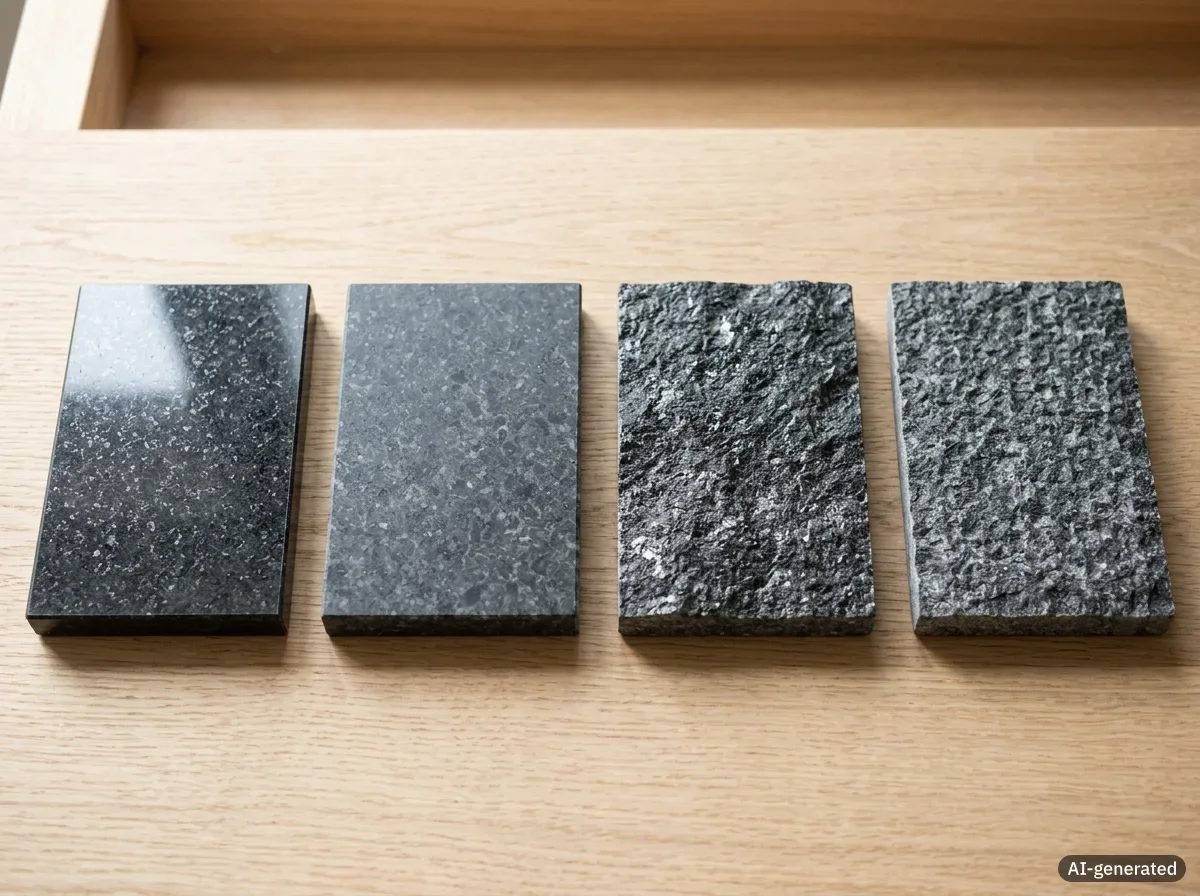
The same variety can look and behave very differently depending on its finish:
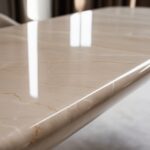
- Polished â reflective and vivid, it deepens colour and veining; the smoothest to clean.
- Honed â smooth but matte, softer in appearance and less prone to showing marks.
- Flamed â textured and slip-resistant, created with high heat; ideal outdoors and on stairs.
- Bush-hammered â a rougher, grippy texture for safe, hard-wearing exterior surfaces.